
How to Choose Motorcycle Riding Boots
Thinking of buying boots for motorcycle riding? A pair of chunky outdoor boots is not the same thing, and treating it as one is how riders end up under-protected. Riding boots are built with different qualities specifically to protect your feet at speed. Here is what actually matters when picking a pair.
Quick Navigation
- What is special about motorcycle boots?
- Are safety shoes good for motorcycle riding?
- Why should you wear boots on a motorcycle?
- What are the types of motorcycle boots?
- What is CE certification for riding boots?
- What makes a boot actually protective?
- Are waterproof riding boots worth it?
- Which are best bike riding shoes for me?
- How to choose the correct size?
What is special about motorcycle boots?
While every other piece of riding gear has to do just one job, riding boots have to do two. You will take off your helmet, gloves, riding jacket and possibly your riding pants the moment you stop for food or reach where you're going. You are unlikely to carry a spare pair of shoes for the rest of the day. So your riding boots need to protect your feet on the bike, and stay comfortable enough to walk in and wear for hours afterwards.
Are safety shoes good for motorcycle riding?
There is a common misconception that safety shoes with steel toe caps work fine for motorcycle riding. They do not. Neither do outdoor or trekking style boots.
Safety shoes are built for a work environment. They protect your feet from something falling on them or from slipping on a wet floor. Trekking style boots are built to be tough on rough ground or just to look good. Neither type is designed to protect your feet while they are moving at speed and can be caught under a falling motorcycle.
So the honest answer is no, they are not a substitute for a proper riding boot.
Why should you wear riding boots on a motorcycle?
Riding boots are built to protect your feet even if you crash or fall at speed. Nothing makes you immune to injury, but compare a crash while wearing riding boots against the same crash in any other footwear, and your feet come off far better in the riding boots.
In most motorcycle accidents, the toe and ankle area takes the brunt of the impact. So the main job of a riding boot is to stop your toes and ankles from twisting or breaking. Riding boots are built to resist that twisting, often with dedicated features like toe sliders, and most also carry a one piece shank inside the sole. This stops the boot folding like an accordion during a fall.
Nearly all motorcycle riding boots also carry extra padding at the gear shifter area, so the upper does not tear from repeated gear changes.
If you want the purpose of a riding boot in one line, it is this: reduce unnatural twisting and bending of your feet in a fall.
Types of Motorcycle Riding Boots
Like any other riding gear, boots are built with a specific purpose in mind. Here are the broad categories.

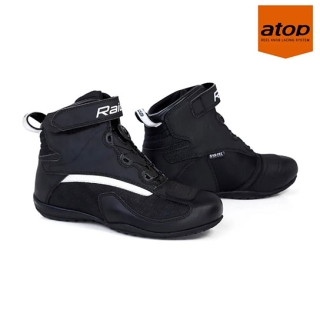
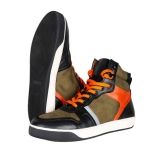
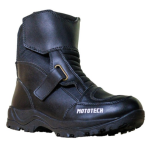
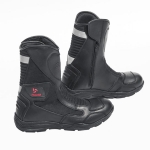
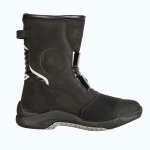
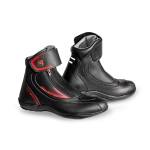
Short riding boots are increasingly popular with riders who want to wear the same pair all day, on the bike and at the office. They do not want to swap into bulky full sized boots the moment they reach work. These sit around ankle high and offer less protection than a full sized boot, but hold up well for city riding. Some short boots look close to a regular sneaker with the protection built in, which is exactly why they work for daily commuting without looking out of place indoors.
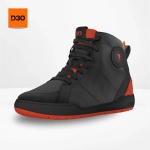
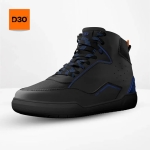
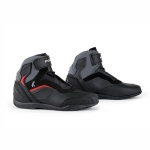
Here are some short / city riding Boots for you:
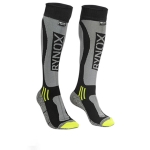
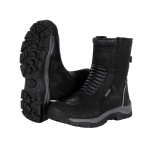
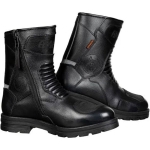

These boots are mid-calf high and sit between short and full length boots. They give up some upper calf protection in exchange for more versatile, everyday use. Less height means less bulk, so if your ride involves a decent amount of walking, these are worth considering.
Full Length Boots
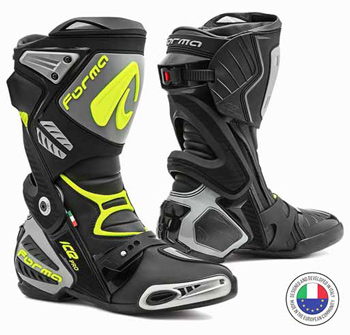
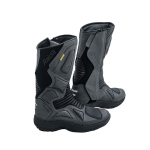
Full length boots cover everything from touring to full racing boots. They offer the most protection but are bulkier than the rest. Most foot injuries in a crash happen when the foot gets trapped during the fall. The ankle bone sticks out from the leg, so it can easily be scraped along the ground during a slide, even in a simple low-side crash. This is why we recommend full height boots wherever the riding allows for it.
Not all full length boots are built the same, so check the specific protection features on offer rather than assuming height alone is enough.
Here are some full height boots for you:
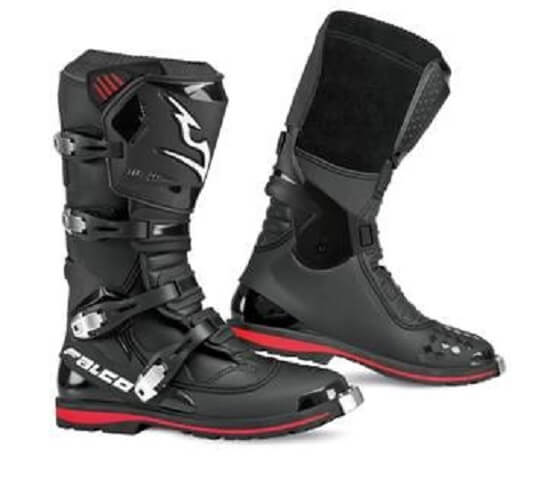
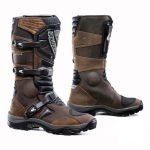
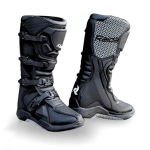
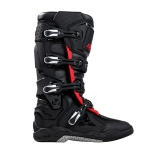
These boots are built for one purpose: off-road riding. You can usually spot them by their external fasteners. Off-road boots have an extremely rigid exterior that can take a hit from stones thrown up by the wheels. They are not built or meant for any other kind of riding.
Here are some Adventure / Motocross / Off-road Riding Boots for you:
Comparing Riding Boot Types
If you already know roughly what kind of riding you do, this table gives you a quick side by side view before you go type by type.
| Boot Type | Best For | Protection Level | Walking Comfort | Weight |
| Short Boots | City riding, daily commuting | Moderate | High | Light |
| Sports / Mid Height Boots | Mixed city and highway use | Moderate to high | Moderate to high | Light to moderate |
| Sports Touring Boots | Long highway days, all day comfort | High | Moderate | Moderate |
| Racing Boots | Track riding, aggressive road riding | Maximum | Low | Moderate to heavy |
| Off-road / Adventure Boots | Trails, motocross, off-road terrain | Maximum | Low | Heavy |
CE Certification for Riding Boots: EN 13634
Most quality riding boots carry a CE certification against a European standard called EN 13634. It is worth understanding, because it tells you exactly what a boot has been tested for rather than leaving you to take a brand's word for it.
The standard tests four zones on the boot, each rated Level 1 or Level 2, with Level 2 being the stronger rating.
- Zone A, height of the upper: how far up the leg the boot extends.
- Zone B, impact abrasion resistance: how well the boot resists tearing if it slides along the road.
- Zone C, impact cut resistance: how well the upper resists being cut by something sharp, like a broken footpeg or road debris.
- Zone D, transverse rigidity: how well the boot resists your ankle twisting sideways under the weight of the bike.
A boot rated 2 2 2 2 has passed every zone at the higher level. A rating like 1 2 1 1 still clears the standard, but performs better in some areas than others. When comparing two certified boots, this is the number worth checking rather than assuming all certified boots offer identical protection.
Some boots also carry optional ratings for slip resistance, water resistance or breathability. These sit outside the core crash-protection test, but are worth knowing about if monsoon riding or a long daily commute is part of your routine.
What Makes a Boot Actually Protective
Beyond the broad type you pick, a few construction details separate a genuinely protective boot from one that only looks the part.
The Sole
The rigid shank inside the sole, usually steel or a composite, is what stops the boot folding under impact, as covered above. Beyond that, look for an oil and slip resistant outer sole, since a fuel spill at the pump or wet tarmac can put you down just as easily as a crash can. A reinforced heel cup matters too, since it absorbs impact and stops the heel collapsing if you land on it directly.
The Upper
The upper should use an abrasion resistant material, whether that is full grain leather, microfibre or a technical textile built for the job, with extra reinforcement at the toe, heel and ankle. Ankle protection usually comes as hard or semi-rigid inserts on both sides of the ankle bone. On a well built boot, you can see these as raised panels rather than just soft padding underneath the material.
The Closure
How a boot closes affects both how it performs in a fall and how quickly you can get it on. Exposed laces can catch on a footpeg, so if a boot uses laces, make sure they sit under a covering flap. Buckles and zips are generally faster and more secure, and many touring boots combine a zip with a buckle or velcro strap to balance convenience with a locked in fit.
Are Waterproof Riding Boots Worth It?
If you ride through the monsoon, or even just the odd unexpected shower, this is worth thinking about before you buy rather than after your first soaking.
Boots with a waterproof membrane keep your feet dry through sustained rain, and dry feet matter for more than comfort alone. Cold, wet feet are a genuine distraction on a bike, and a distracted rider reacts slower. Waterproof boots usually cost more than a similar non waterproof pair, but if you commute daily or tour through the rains, it tends to be worth paying for.
If a fully waterproof boot does not fit your budget right now, a pair of waterproof boot covers is a reasonable stand in for occasional wet rides.
For more on getting through the rains without ruining your gear or your ride, the guide on staying dry while riding in the rain covers this in more depth.
How to Choose the Best Motorcycle Riding Boots for Me?
If you plan to ride mostly inside the city, short boots work best. They stay hidden under your jeans or trousers so you do not stand out, while still protecting your feet.
If you are heading out on the highway or to the track, you can choose between the two options below.
Racing Oriented Riding Boots
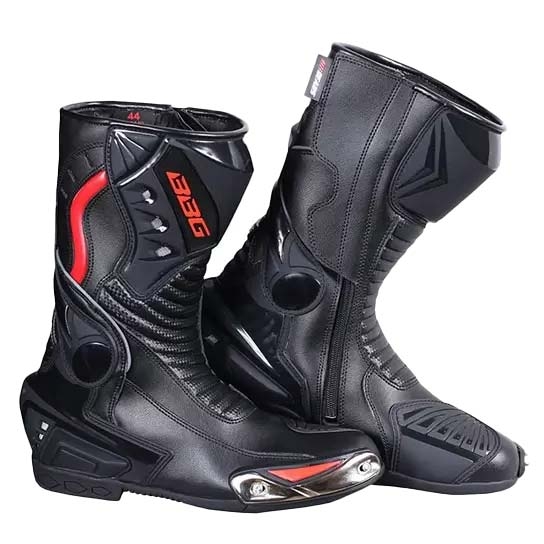
These boots are built for one purpose: safety while riding fast or racing. They offer the maximum protection available but are not the most comfortable for wearing all day. Racing oriented boots carry the most rigidity and protection of any riding boot, which is exactly the trade-off you want if you ride aggressively and protection comes first.
Sports Touring Oriented Boots

Sports touring oriented boots are built for riders who want to be on the bike all day and stay comfortable while doing it. They are not armoured as heavily as racing boots, trading some rigidity for flexibility. Comfort alongside a good level of safety is the whole point here, and many sports touring boots are also waterproof.
If your riding style is more relaxed than aggressive, the comfort these boots offer is usually the better trade-off.
Fit and Sizing: Getting This Right
Riding boots should feel snug with your riding socks on, close enough that there is minimal movement inside the boot, but not so tight that your toes are compressed.
A reasonable starting point is the EU size on your regular sneakers or sports shoes. Check the conversion chart below, then confirm the fit using the checks that follow rather than relying on size alone.
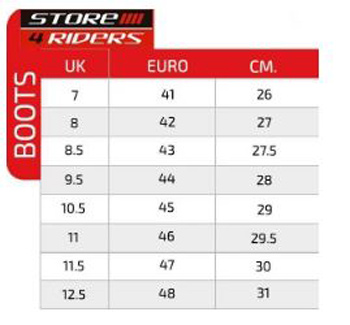
A few things worth checking once the boots are on:
- No heel lift. Your heel should not rise when you walk. If it does, the boot is too long, and it changes where the ankle protection sits relative to your actual ankle bone.
- Ankle inserts in the right place. The reinforced panels on either side should sit directly over your ankle bone, not above or below it.
- Enough toe room. Your toes should not be crushed, but there should also not be enough space for your foot to slide forward under hard braking.
- Walk and flex in them. Walk around, flex your foot as if working the gear lever, and twist your ankle slightly. You should feel the boot resisting the twist, not giving way.
If you are stuck between two sizes, go with the larger one. A slightly loose boot is a minor inconvenience. A boot that is too small can affect circulation on longer rides and stops the ankle protection from doing its job properly. In case of any doubt, buy one size bigger. Never buy a smaller size hoping it will stretch.
Quick Reference: What to Check Before You Buy
Certification: Is the boot CE certified to EN 13634, and do you know the zone rating.
Construction: Does it have a rigid shank, reinforced ankle inserts on both sides, and a reinforced toe box.
Fit: No heel lift, ankle inserts sitting directly over the ankle bone, enough toe room without excess space.
Practical use: Full boot, mid height, or a sneaker style riding shoe, whichever one you will actually wear on every ride, plus waterproofing if you ride through the monsoon and a closure system with no exposed laces.
Already know what you're looking for? Head straight to our riding boots category page to filter by height, brand and price.
Did you find this guide useful? Do you feel we should cover something else? Let us know and we will be happy to add it.
So choose wisely and ride happily.
FAQs
Q: What is the difference between motorcycle boots and regular safety shoes?
A: Safety shoes are built for a work environment and protect against falling objects or slippery floors, not against a foot being crushed or twisted at speed. Motorcycle boots are built specifically for that, with a rigid shank, ankle protection and abrasion resistant materials that safety shoes do not have.
Q: What does CE certification (EN 13634) actually tell me about a boot?
A: It tells you the boot has been tested across four zones, upper height, abrasion resistance, cut resistance and ankle rigidity, each rated Level 1 or Level 2. A boot rated 2 2 2 2 has passed every zone at the higher level, so checking the zone rating tells you more than the certification alone.
Q: Are waterproof riding boots necessary in India?
A: If you ride daily, commute through the monsoon, or tour for long stretches, yes, it is worth the extra cost. Wet feet are more than uncomfortable, they distract you while riding. If you only ride occasionally in the rain, a pair of waterproof boot covers over a non waterproof boot is a reasonable middle ground.
Q: How should riding boots fit?
A: Snug with your riding socks on, with no heel lift when you walk and no excess space at the toe. The ankle inserts should sit directly over your ankle bone. If you are between sizes, go a size up rather than down.
Q: Which type of riding boot should I buy?
A: It depends on how and where you ride. Short boots suit city riding and daily commuting. Full length boots suit touring and highway riding. Racing boots suit the track. Off-road boots suit motocross and trail riding. Match the boot to your actual riding, not the other way round.
Let's have a look at few of the products we offer:


Be the first to learn about our latest trends and get exclusive offers