
How to Choose the Right Motorcycle Riding Jacket
Last updated: September 2026
Why This Matters
A riding jacket is not the same thing as a jacket that looks like it belongs on a bike. The difference sits in what you cannot see from the outside: armour at the shoulders and elbows, abrasion resistant material, and a build designed to stay on your body during a slide rather than tear off in the first second.
Most riders buying their first jacket get pulled toward looks, price, or whatever the shop has in their size. None of those tell you whether the jacket will actually do its job if you go down.
This guide covers what to check before you buy: armour and certification, material choice for Indian weather, fit, ventilation, and the small details that separate a real riding jacket from something that just resembles one.
- Certified armour at shoulders and elbows, not just foam padding
- Mesh, textile or leather, chosen for how and where you actually ride
- A fit that keeps armour in place even when your arms move
- Ventilation that matters more in India than in most riding gear content written elsewhere
What Actually Makes a Jacket a Riding Jacket
A biker style leather jacket can look convincing and still offer close to nothing in a fall. What separates a genuine riding jacket is armour, usually at the shoulders and elbows, sometimes with a back protector as well, held in place by pockets sewn into the jacket lining. The outer material also needs to be abrasion resistant enough to survive sliding across tarmac without shredding in the first metre.
Foam padding that has not been tested and rated does not tell you how much protection it actually offers. That is where certification comes in.
Armour and CE Certification
Look for a CE mark on the armour itself, not just a claim printed on the jacket's tag. CE Level 1 and Level 2 armour have both been tested for impact absorption, with Level 2 transmitting less force through to your body and offering meaningfully better protection at higher speeds. See our full guide to CE armour standards for a detailed breakdown of Level 1 vs Level 2 and Class A/AA/AAA ratings.
For city commuting at moderate speeds, Level 1 armour at the shoulders and elbows is a reasonable minimum. If you ride on highways or tour regularly, Level 2 armour is worth the extra cost, since impact speeds and consequences both go up.
A separate back protector is worth adding if your jacket does not already include one, particularly for touring, since spinal injuries are disproportionately serious relative to how little most jackets do to prevent them by default.
Choosing the Right Material
Mesh and Textile Jackets
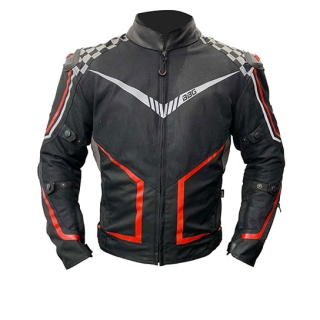
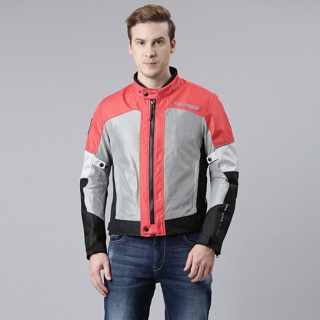
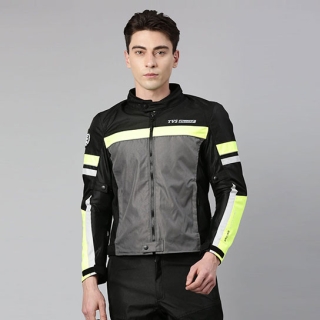
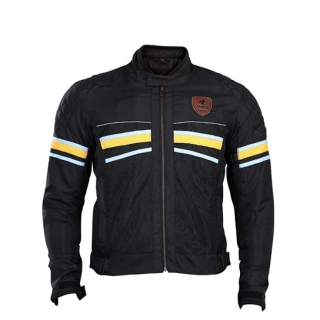
Mesh jackets are built around airflow, with abrasion resistant panels placed only where they are needed most and open mesh everywhere else. They suit city riding and hot weather stretches, which covers most riding in India for most of the year.
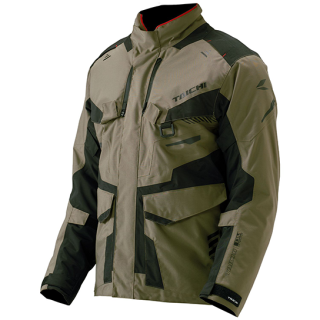
Textile jackets sit a step up in protection and weather resistance, usually with thicker material and less open mesh, at some cost to ventilation.
Leather Jackets
Leather remains the benchmark for abrasion resistance and holds up well over years of use. It comes with real tradeoffs in Indian conditions: little to no ventilation, more weight, and a higher price. Leather makes more sense for touring or track use than for a daily commute in city heat.
Which One Should You Buy
If most of your riding is short trips in city traffic through hot weather, a mesh jacket with CE armour covers you well without leaving you drenched in sweat at every signal. If you tour regularly or ride longer distances at higher speed, a textile jacket built for touring, with a tougher shell and armour rated for higher impact, is the better investment.
Liners: What They Actually Do
Most jackets come with removable liners rather than fixed insulation, so you can adjust the jacket to the weather instead of buying a separate jacket for every season.
- Rain liner: blocks water from getting through the outer shell. Read the product description carefully, since water resistant and waterproof are not the same claim.
- Thermal liner: adds warmth for cold weather and high altitude riding, and is removable for warmer stretches of a ride.
Many jackets are sold without liners to bring the price down. If you buy one of these, plan on separate rain gear or thermals rather than assuming the jacket alone will cover you across seasons.
Getting the Fit Right
A jacket that is too loose defeats the purpose of the armour inside it. If the jacket shifts on your body, the shoulder and elbow armour shifts with it, and in a fall it may no longer sit over the joint it is meant to protect. A jacket that is too loose can also catch on the road surface during a slide, which increases the chance of a rider tumbling awkwardly instead of sliding cleanly.
Move through a normal riding position (arms forward, elbows slightly bent) while trying the jacket on, and check that the armour stays roughly where it should. Many touring jackets include zips or fasteners at the waist that connect to matching riding pants, which keeps the jacket from riding up during a crash and adds another layer of protection at the point where jacket and pants meet.
While ordering online, measure your chest, shoulders and arm length against the brand's specific size chart rather than assuming your regular clothing size will carry over, since sizing varies noticeably between brands.
Ventilation for Indian Weather
Most riding in India happens in heat, which makes ventilation a genuine safety consideration and not just a comfort feature. Overheating on a long ride affects concentration and reaction time. Unless you are using a full mesh jacket already, check for vents at the chest, back and arms, and confirm they can be closed if you do end up riding into rain or cold.
Visibility
Being seen matters as much as being protected once you are seen. A jacket in dark, low contrast colours is harder for other drivers to pick out, especially at dusk or in heavy traffic, which is a large share of riding conditions in India.
Reflective panels, particularly on the back of the jacket, help considerably at night without requiring you to wear high visibility colours all the time. Some riders prefer to keep high visibility elements to a minimum for everyday styling reasons, in which case reflective strips are a reasonable middle ground between visibility and looking like a jacket rather than a safety vest.
A Quick Buying Checklist
- CE Level 1 or Level 2 armour at the shoulders and elbows, tested and marked, not just padded
- Material matched to how you ride: mesh for city and heat, textile for touring, leather for track or heavy touring use
- A fit where armour stays in place through a full riding position
- Removable liners if you ride across seasons or altitudes
- Reflective elements for visibility after dark
If your jacket is already a few seasons old, our riding jacket cleaning and maintenance guide covers how to wash it without damaging the armour or the material's weatherproofing.
Related Guides
- CE Armour Standards Explained: Level 1 vs Level 2 and Class A/AA/AAA, covered in depth
- Choosing a Right Riding Pant: the connection zipper and matching armour standards for your lower body
- Motorcycle Gear Sizing Guide: exact measurements to get your jacket size right the first time
- Waterproof Riding Gear: what a rain liner actually covers versus dedicated monsoon gear
- Riding Jacket Cleaning Guide: how to wash it without damaging the armour or shell
FAQs
Q1: What is the difference between a riding jacket and a regular jacket that looks similar?
A1: A genuine riding jacket has CE certified armour built into pockets at the shoulders and elbows, along with abrasion resistant outer material. A jacket that only looks like riding gear, without tested armour or abrasion resistant fabric, will not hold up the same way in a fall even if it looks nearly identical.
Q2: Should I buy a mesh jacket or a textile jacket for daily riding in India?
A2: For city commuting and hot weather, a mesh jacket with CE armour keeps you cooler without giving up protection. If you ride longer distances, tour regularly, or want more coverage against wind and weather, a textile touring jacket is the better fit, at some cost to breathability.
Q3: What CE armour level should I look for in a riding jacket?
A3: CE Level 1 is a reasonable baseline for city riding at moderate speeds. CE Level 2 transmits less impact force and offers better protection at highway speeds, which is worth the extra cost if you ride longer distances or tour regularly.
Q4: How do I know if a riding jacket fits correctly?
A4: The armour at your shoulders and elbows should stay in roughly the same position as you move through a normal riding posture. If the jacket shifts noticeably or the armour slides away from the joint it is meant to protect, the fit is wrong even if the jacket feels comfortable standing still.
Q5: Is a jacket with a rain liner enough for riding in the monsoon?
A5: It depends on the liner and how heavy the rain is. A removable rain liner handles light to moderate rain reasonably well, but water resistant is not the same claim as waterproof. For regular monsoon commuting, dedicated rain gear worn over your jacket will keep you drier for longer.