
How to Choose the Right Motorcycle Riding Gloves
Last updated: September 2026
Why This Matters
Your hands are usually the first part of your body to hit the ground in a fall. Riders reach out instinctively to break a fall, which is exactly why proper riding gloves matter more than most people assume when they buy their first pair.
Fingerless or half finger gloves, the kind sold at general sports counters, offer close to no protection where it counts. Real riding gloves are built around abrasion resistant material, knuckle protection and a fastening system that keeps the glove on your hand during a slide rather than off it.
This guide covers cuff types, materials, and the fit and protection details worth checking before you buy, so you are not choosing gloves on looks alone.
- Full coverage over half finger or fingerless designs, every time
- Cuff length matched to how you actually ride: city, touring or both
- Leather, mesh or hybrid, chosen for protection versus breathability
- Knuckle protection and a secure wrist closure that won't come loose in a fall
- CE Level 1 vs Level 2 rating under EN 13594, increasingly common and worth checking
Browse our full range of riding gloves once you've decided what you're looking for.
Why Fingerless Gloves Are the Wrong Choice
Fingerless or half finger gloves are common at general stores and easy to mistake for riding gear because they look sporty and offer some grip. They do not protect your fingers, knuckles or the fleshy part of your palm, all of which are common points of impact in even a low speed fall. A small tip-over at parking lot speed can still do real damage to unprotected hands. Full finger riding gloves with proper coverage are the baseline, not an upgrade.
Cuff Types and What They're For
Short Gloves
Short gloves stop around the wrist and are the easiest to put on and take off, which suits city riding where you are getting on and off the bike frequently. They offer the least coverage of the three types and are best suited to short trips at lower speeds rather than anything outside city limits. Browse our short motorbike gloves range to see current options.
Semi Gauntlet Gloves
Semi gauntlet gloves sit between short and full gauntlet, with a longer cuff and usually a better fastening system than short gloves, without the bulk of a full gauntlet design. They work well for riders who want more protection than a short glove offers but do not want the extra coverage of a full gauntlet for everyday commuting. Browse our semi gauntlet gloves range to see current options.
Full Gauntlet Gloves
Full gauntlet gloves extend well past the wrist and seal properly over a jacket sleeve, keeping out wind, debris and water more effectively than the other two types. They offer the most protection of the three and are the standard choice for touring, highway riding, or any ride that takes you outside city limits. Multiple fastening points keep the glove secure even if it takes a direct impact. Browse our full gauntlet gloves range to see current options.
Choosing the Right Material
Leather Gloves
Leather is naturally abrasion resistant and holds up well in a slide, which is why most serious touring and track gloves are built from it. The tradeoff is heat. Leather gloves offer little airflow, which matters during long rides in Indian summer heat.
Mesh and Textile Gloves
Mesh gloves prioritise ventilation and are noticeably cooler for hot weather riding, at some cost to abrasion resistance compared to leather. They suit short, low speed city rides better than highway use, where the protection gap matters less.
Hybrid Gloves
Hybrid gloves combine leather panels at high impact points, like the palm and knuckles, with mesh elsewhere for airflow. This is usually the best balance for Indian conditions, offering real abrasion resistance where a fall is most likely to cause damage, without leaving your hands soaked in sweat on a hot commute.
Protection Features Worth Checking
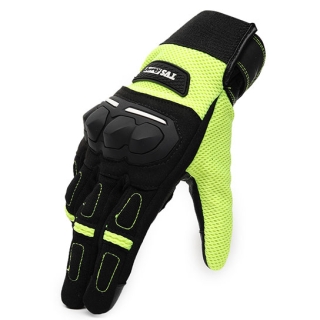
- Knuckle protection: hard plastic or composite knuckle guards reduce impact injury in a fall and are worth looking for on any glove meant for more than very short, slow rides.
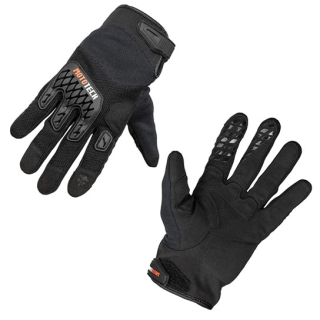
- Palm sliders: reinforced panels on the palm reduce friction burn if your hand contacts the road during a slide.
- Double stitching: reinforced seams at high stress points hold up better under impact and last longer with regular use.
- Wrist closure: a secure strap or velcro closure keeps the glove from being pulled off your hand during a crash, which a loose or missing closure will not do.
CE Level Rating for Gloves (EN 13594)
CE rated gloves are becoming a lot more common, and the rating is worth checking the same way you'd check it on a jacket or pants. Motorcycle gloves are tested under EN 13594, a European standard that covers abrasion resistance, seam and tear strength, cuff length, and how well the glove stays on your hand under load, in addition to impact protection.
EN 13594 defines two performance levels:
- Level 1 gloves meet the baseline requirements of the standard, prioritising flexibility and lower weight. Knuckle protection is optional at this level.
- Level 2 gloves are tested to a higher protection threshold, including mandatory knuckle impact protection, and generally offer noticeably better abrasion and impact performance at some cost to flexibility and weight.
A glove marked KP alongside its level has passed a separate, dedicated knuckle protection impact test, which is mandatory for Level 2 gloves and optional for Level 1 gloves that choose to include it. If you're comparing two gloves at a similar price, a genuine CE Level 2 KP rating is a stronger, independently tested signal of real protection than marketing language like "armoured" or "reinforced" on their own. Our CE armour standards guide covers how the same certification logic applies to jacket and pant armour, tested under a related but separate standard.
Getting the Fit Right
Gloves that are too loose bunch up inside the palm and reduce your grip and feel on the handlebar, while gloves that are too tight restrict movement and cause fatigue on longer rides. Try gloves on with your hand in a natural grip position, fingers slightly curled as they would be on a handlebar, rather than flat, since sizing that looks right with a flat hand can feel wrong the moment you grip something.
Most brands run their own size charts rather than a universal standard, so measure your hand (typically palm circumference, excluding the thumb) and check it against the specific brand's chart before ordering online.
Weather Considerations for Indian Riders
For most of the year, ventilation matters more than waterproofing for the majority of Indian riders, since heat and sweat are the daily reality rather than rain. During monsoon months, a separate pair of waterproof or water resistant gloves is usually a better solution than trying to find one glove that handles both extremes well, since gloves built to do both tend to compromise on each. See our guide to waterproof riding gear for a simple, low cost way to waterproof your hands without buying a dedicated pair.
Touchscreen compatible fingertips are worth checking for if you use your phone for navigation mid-ride, since removing a glove at every stop gets old quickly.
A Quick Buying Checklist
- Full finger coverage, never fingerless or half finger, regardless of riding style
- Cuff length matched to your riding: short for the city, full gauntlet for touring and highways
- Hybrid leather and mesh construction for most Indian riding conditions
- Knuckle protection and reinforced palm on any glove used beyond very short, slow rides
- A secure wrist closure that won't loosen or slip off during a fall
- CE Level 2 KP under EN 13594 where you can find it, for the strongest independently tested protection
Once you've picked a pair, our glove cleaning guide covers how to clean leather and mesh gloves separately, since the wrong method can stiffen or crack leather over time.
Related Guides
- Choosing a Right Riding Jacket: how jacket sleeves should close over your glove cuffs
- CE Armour Standards Explained: how certified impact protection is tested and rated
- Motorcycle Gear Sizing Guide: how to measure your palm correctly for a snug fit
- Riding Gear for Women: sizing notes if a unisex glove range isn't fitting right
- Glove Cleaning Guide: cleaning leather and mesh gloves the right way
FAQs
Q1: Are fingerless or half finger gloves okay for motorcycle riding?
A1: No. Fingerless and half finger gloves leave your fingers, knuckles and palm exposed, which are common points of impact in even a low speed fall. Full finger riding gloves with proper coverage are the minimum standard, not an optional upgrade.
Q2: What's the difference between semi gauntlet and full gauntlet gloves?
A2: Semi gauntlet gloves have a shorter cuff and suit everyday city riding, offering more protection than a short glove without the bulk of a full gauntlet. Full gauntlet gloves extend well past the wrist, seal over your jacket sleeve, and offer the most coverage, making them the standard choice for touring and highway riding.
Q3: Should I buy leather or mesh gloves for riding in India?
A3: For most Indian riding conditions, a hybrid glove with leather at the palm and knuckles and mesh elsewhere offers the best balance, giving you real abrasion resistance where it matters most without overheating your hands in the city heat.
Q4: How should riding gloves fit?
A4: Try gloves on with your hand curled into a natural grip, not flat, since that's the position you'll actually be riding in. The glove should feel snug without restricting movement, and it shouldn't bunch up in the palm or pull tight across the knuckles when you grip a handlebar.
Q5: Do riding gloves need to be CE certified, and what do the levels mean?
A5: CE certified gloves, tested under EN 13594, are becoming increasingly common, and the rating is worth checking the same way you would on a jacket. Level 1 covers baseline protection with optional knuckle protection, while Level 2 requires mandatory knuckle impact protection (marked KP) and generally offers better abrasion resistance. If you can't find a CE rated glove, prioritise reinforced knuckle guards, palm sliders and double stitching at stress points from a known riding gear brand instead.