- 40+ checkpoints across bodywork, engine, tyres, electricals, and documents
- Written from real dealership experience, including common delivery tricks to watch for
- Works for petrol and electric two-wheelers
- No tools needed. Just daylight, ten minutes, and this checklist.
| Area | What to check |
| Bodywork & paint | Dents, scratches, flaky paint, panel gaps |
| Engine & transmission | Oil level, starting sound, smoke, chain slack, gear shifts |
| Suspension | Fork seal leaks, smooth travel, no clunking |
| Tyres | Pressure, manufacturing date, tread, embedded stones |
| Electricals | Lights, horn, indicators, battery, ABS self-check |
| Documents | Invoice, engine/chassis number match, insurance cover, RC timeline |
| Test ride | Handling, brakes, noise, vibration, pulling to one side |
| Final checks | Toolkit, manual, spare key, extras promised at sale |
Process of deciding which motorcycle to buy
- The process of buying a new bike usually starts with shortlisting a bike. We have an excellent article about how to choose a bike that you would love for years. Click on How To Choose a Bike Guide.
- Once you decide on which motorcycle to buy, you would start making trips to various dealers in the city to find out discounts and various offers.
- Next Step is deciding about model, variant, colour and accessories.
- Finally, on the basis of above three points, one decides to buy a certain bike in cash or finance it. For those who want to buy a bike on a bank loan, read the excellent (if we may say so ourselves) article about Bank Loans and Deals here.
Read this before you rush to book a bike
Once the bike is finalised, price negotiated and the payment is made, then comes the painful waiting period. One important aspect of buying a bike is patience. Usually, one is so very excited about buying a new bike that one will urge the showroom to deliver the bike at the earliest.
This is where a potential trap lies for the customer. Most showrooms will keep adequate stock for festive seasons and during the months when sales are typically high. However, for models that sell very well, it is possible that the stock might run low and the showroom has only the test ride bike or the display bike.
Many showrooms will disconnect the speedometer/ odometer so that the test bikes do not accumulate any km on the odometer. Showrooms are keen on selling off such bikes. While most showrooms would inform customers about availability of such bikes, there are showrooms that would not mind passing off these bikes to the customer as a new bike.
A classic example would be when the showroom guy says that there is only one bike left for you; or when they deny the availability first, only to call later and inform that there is one in the stock. Such bikes are usually abused by customers during test rides and one should stay away from such deals.
It is always advisable to request the showroom to show you the stock and you can select one for yourself. Most showrooms will oblige; and those that don’t, walk away from them. While selecting your bike, check the points below and scrutinize the bike.
Don’t forget to do this inspection the bike in broad daylight. Lesser light hides more.
What is PDI for bike?
PDI means Pre-Delivery Inspection. This is when you go to a showroom and check the bike that has reached or you pick out a bike that is already in stock at showroom. The elements in any PDI are :
Bodywork & Paint:
- Check the bodywork for flaws, dents, and scratches. A dented panel indicates loading-unloading damage or accidental fall. Whatever the case, stay away.
- Check the paint on the bike. It should not be flaky or patched. The paint should be uniform and the reflection of a tube light should show the tube light as a straight bar. Poor paint quality will reflect it zigzagged.
- Check for abrasions on handlebar ends, front brake lever, clutch lever, crash (leg) guards, foot pegs (check feelers, if available on the model. Feelers are the bolts below foot peg. This is the first part to make contact with the ground when the bike is turning or when it falls over), gearshift lever, and rear brake lever. If abrasions are found, it means the bike has had a fall somewhere. Stay away.
- Check for cuts and cracks on seat padding and cover. It is easy to miss the spots on the sides and lower edges. If there is any cut or crack, stay away.
- Check for all transparent surfaces – headlamps, tail lights, indicators, speedometer consoles –and check for scratches, nicks or worse, cracks. If found, stay away.
- Check for the side stand and main stand (if available). In some cases, the side stand tilts the bike too much. This may mean that the bike you are getting has been used earlier (or it may also mean that the stand is broken or bent). Trust your judgment and ask the dealer for an explanation. If something smells fishy, move away.
- Open the fuel tank and check the insides with a bright torch. If there is rust, stay away.
- Likewise, check the exhaust pipe. If there is rusting near the tip, stay away.
- With the bike on stand, rotate the wheels and see if any wheel wobbles or anything is irregular about its rotation. Check for damage to the rims/alloys, spokes. If they seem bent or rusted, insist on a replacement.
- If the bike has a radiator, bend down and check the radiator fins. Many a times, service centers spray a concentrated water jet on radiators while cleaning and that bends the fins. Such radiators will find it difficult to dissipate heat. If the fins are bent, stay away. Even if the dealer insists that he will replace the radiator, do not agree for this.
- The above point is also valid for oil cooled engines. A small oil cooler has similar construction (although a bit stronger). Stay away if there is damage.
Engine & Transmission:
- Before you ask showrooms to start the engine, ask them to confirm the oil level. Although it is unlikely that the bike will have less engine oil, a check doesn’t harm anyone.
- If the vehicle is a scooter or any similar machine where transmission oil is required separately, check for the transmission oil level as well. There have been cases where there was no transmission oil and the bike broke down.
- Start the engine and listen to the sound. Fuel Injected engines will start with a slightly higher idle rpm and gradually settle down as the engine temperature normalizes. Carbureted bikes may need a choke to start and they will also settle down once the choke is closed. Check for any excessive smoke from the exhaust pipe. White smoke may mean trouble. Stay away.
- On four stroke engines, check for ticking noises from the cylinder head. If you hear an excessive ticking noise, it may be due to incorrect cam clearance or the chain tensioner. If this noise is not loud and concerning, get it corrected by the dealer. Even in this case, try to find another vehicle with no such noise.
- Check the bottom of the crankcase for any leakage, dents, scratches, marks of anything on the underbelly. If found, stay away.
- Blip the throttle gently (not to the red line please) and check if the engine sounds okay or is there any excessive induction/ exhaust noise. Usually, any excessive noise may indicate leakages but this one is rather difficult to diagnose correctly.
- Check if the tachometer and fuel gauge is functioning.
- Insist for a small ride on the bike. Check if the bike pulls to one side and whether the handlebar is aligned correctly.
- For fully faired bikes, you may need to bend and inspect with a good torch. Check for oil leakages around the cylinder head, plug and bottom of the block where it interfaces with the crankcase.
- Check if the radiator contains enough coolant.
Chain & Sprocket:
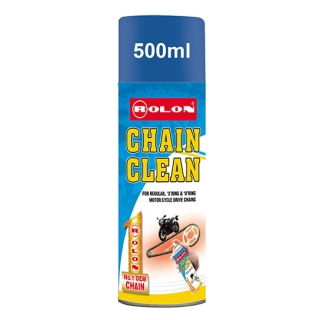
- Check chain slack by hand. Most manufacturers specify 20-30mm of vertical play at the tightest point of the chain; check your owner's manual for the exact figure.
- The chain on a new bike should already be lubricated or waxed from the factory. A dry, dull-looking chain on a "brand new" bike is worth asking about.
- Look at the sprocket teeth. They should be uniformly shaped. Hooked or shark-fin shaped teeth indicate the chain and sprocket set has already seen real use.
- Rotate the rear wheel and watch the chain run over the sprocket. It should sit centered, not visibly skewed to one side.
Suspension:
- Push down on the handlebar and seat a few times to check that the front forks and rear shock absorb the movement smoothly, without any clunking or resistance.
- Check the front fork tubes for oil seepage. A thin oily film near the seals means the fork seal may already be leaking, which is not something you want to discover a week after delivery.
- On bikes with adjustable rear suspension (preload, rebound), check that the adjuster isn't seized or already at an extreme setting from transit.
- With the bike off the stand, gently bounce the bike using the handlebar and seat together. Both ends should return to position smoothly and quietly.
Electrical Checks:
- Check if the lights, indicators, horn, tail lamps are working.
- If the bike is equipped with LED lights, check if they are working.
- If the bike is equipped with a side stand sensor or clutch-in sensor, check if those are working.
Mirrors & Safety Electronics:
- Check both mirrors for cracks, and confirm they hold their position without drooping once adjusted.
- If your bike has ABS (mandatory on bikes above 125cc in India), confirm the ABS indicator lights up on ignition and switches off after a few seconds, which is the standard self-check sequence. If it stays on, flag it before delivery.
- If the bike has traction control, ride modes, or a side-stand cutoff switch, ask the delivery staff to demonstrate each one works as expected.
- On fuel-injected bikes, listen for the fuel pump priming sound (a brief whirring noise) when you turn the ignition to ON, before starting the engine. Its absence can indicate a fuel system issue.
Tyres:
- Check for stones and wear on tires. A new bike is transported in a truck from manufacturer to showroom. So it should not have a lot of stones embedded in the tread.
- Check for tire pressures. Manufacturers and showrooms over-inflate tires to prepare for the long standing periods at stockyards. The year of manufacturing on the tyres should not be more than one year.
Battery:
- Ask the dealer to open the battery compartment (usually under the seat) and show you the battery terminals. They should be clean, tight, and free of white/green corrosion.
- Self-start the bike two or three times in a row. A battery that struggles by the second or third attempt may not be holding charge properly.
- For bikes with a battery-level or voltage indicator on the console, check the reading is within the normal range shown in the owner's manual.
Documents you should check before taking delivery
- Invoice matches what you agreed to. Check the model, variant, colour, accessories, and final price line by line. Dealers sometimes add "handling" or "accessory" charges that were never discussed. Query anything that wasn't part of your original quotation.
- Engine and chassis numbers match across every document. The number stamped on the bike should match the number on your invoice, RC application, and insurance copy exactly. A mismatch here can cause real problems later during resale, insurance claims, or an RTO transfer.
- Insurance policy matches what you paid for. If you paid for a comprehensive or zero-depreciation policy, check that the policy document actually says so. Paying for one cover and receiving a cheaper third-party-only policy is a known shortcut some dealers take.
- Ask about the RC, number plate, and PUC timeline. You won't receive your Registration Certificate (RC), permanent number plate, or Pollution Under Control (PUC) certificate on delivery day. In most Indian cities, the number plate takes roughly one to two weeks, and the RC and tax paperwork can take up to a month. Get a written or WhatsApp confirmation of the expected date, and avoid riding on public roads until you have valid interim documents.
- Confirm the toolkit, owner's manual, and warranty card are in the box. These get left out more often than you'd expect, especially during busy delivery days.
- Get your extra key. Nearly every bike ships with two keys. Confirm you're getting both before you leave the showroom, not "next week."
- Note the engine and chassis number yourself, even if delivery is happening the same day. If there's any delay or if the bike gets swapped before final handover, you have a record of the exact unit you inspected.
Final Inspection:
- Check crevices, swing arm pivots, area under the engine, the radiator, area inside the mudguards for signs of mud, stones, and grime. If present, it may mean that the bike was ridden before and washed cleanly to be sold. Remember that only a very detailed cleaning job might be able to wash away dirt and dust from these obscure areas.
- Check toolkit, owner manual, tax receipts, insurance papers are being given along with the bike.
- Please ensure you are getting the extra keys.
- Ensure that you complete the formalities on the same day on which you choose the bike.
- Write down the engine and chassis number of the chosen bike if the delivery is not on the same day.
PDI for electric bikes and scooters
The core idea is the same, but a few checks are specific to electric two-wheelers:
- Check the battery charge percentage shown on the dashboard at delivery. It should typically be delivered with a partial to moderate charge, not empty.
- Ask for the battery warranty document separately. It's usually different in duration from the vehicle warranty.
- Check that the charger, charging cable, and any charging adapter are included in the box.
- Take a short ride to confirm regenerative braking (if equipped) engages smoothly and that the range estimate on the dashboard updates sensibly as you ride.
- Inspect the battery compartment or under-seat area for any signs of moisture or loose wiring.
Most important thing to note-
Make friends with the showroom guy
The chances of him tricking you go down by a large percentage. If you behave like a typical egoistic customer, expect to get a bad experience in return.
Final check:
- Get an invoice from showroom. Confirm that the amount you paid matches with the invoice amount.
- Confirm that the engine number and chassis number is same as your shortlisted bike. Confirm that they are correctly written in tax receipt and invoice. If they aren’t, you would have trouble in case of transfer / claiming insurance.
- Confirm that the insurance policy is what you paid for. It won’t help you if you paid for zero dep policy and you got some cheap policy.
Editor’s Note
The PDI checks mentioned above are in no terms absolute but following these will ensure that you getting a bad deal go down tremendously. Again, these are generic checks and some checks may need to be added or taken out depending on the type of bike you choose.
We hope this PDI Checklist for motorcycles helped you. Leave us a comment if you feel we missed out on something which can be added to the PDI list.
Frequently Asked Questions:
Q1. What does PDI mean for a bike?
A1. PDI stands for Pre-Delivery Inspection. It's the check you or the dealership carries out on a motorcycle or scooter before you accept delivery, covering bodywork, engine condition, tyres, electricals, and paperwork, to confirm the bike is genuinely new and matches what you paid for.
Q2. Who is responsible for doing the PDI, the dealer or the customer?
A2. Dealerships are expected to run their own internal PDI before a bike reaches the showroom floor. That said, this is your money and your bike, so it's worth doing your own quick inspection at delivery regardless of what the dealer has already done.
Q3. How long does a bike PDI take?
A3. A thorough PDI usually takes twenty to thirty minutes, including a short test ride. It's a small time investment compared to living with an undetected issue for months.
Q4. What documents should I check during PDI?
A4. Check that the invoice matches your agreed price and variant, that the engine and chassis numbers match across the bike, invoice, and insurance copy, and that your insurance policy reflects the cover you actually paid for.
Q5. Can I do a PDI for a used or second-hand bike too?
A5. Yes, and it's arguably more important there. A used bike PDI follows the same checklist but adds a closer look at wear items like brake pads, chain stretch, tyre age, and service history, since these tell you how the bike was actually used.
Q6. What if I find a defect during PDI?
A6. Don't accept delivery of that specific unit. Politely point out the issue and ask the dealer to show you another bike from stock. Most dealerships carry more than one unit of popular models, and a defect found before you sign is entirely the dealer's problem to fix, not yours.
Q7. Do electric bikes and scooters need a different PDI process?
A7. Mostly the same checklist applies, with a few additions: check the battery's delivered charge level, confirm the charger and cable are included, and take a short ride to see that regenerative braking and the range estimate behave normally.
Q8. Is PDI legally required in India?
A8. There's no single law forcing a customer-side PDI, but manufacturers do require dealerships to complete an internal PDI before delivery as part of their dealership agreements. Doing your own check on top of that is a personal safeguard, not a legal formality.
So choose wisely and ride happily.
Let's have a look at few of the products we offer:



Be the first to learn about our latest trends and get exclusive offers