
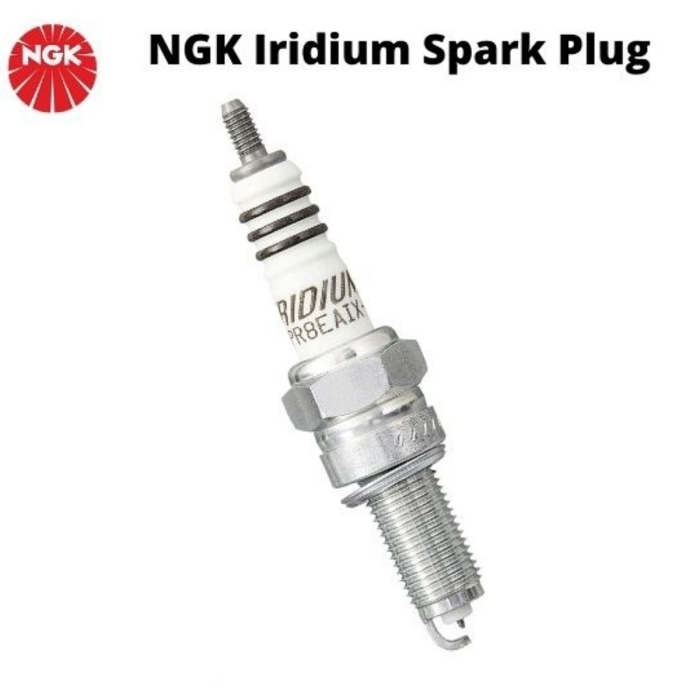
NGK Iridium Spark Plug Set for RE Thunderbird 350
NGK Iridium Spark Plug Set for RE Thunderbird 350
The Thunderbird 350 uses Royal Enfield's twin-spark UCE engine design, where two plugs fire into the same cylinder from different positions for more complete combustion. That's why this set contains two different NGK codes, BPR5EIX and CPR7EAIX-9, rather than two of the same part. Each sits in a different position with its own reach and heat range requirement.
Buying them as a matched set removes the guesswork of ordering the correct plug for each position separately.
Set Includes
Left and right hand side, Part Numbers: BPR5EIX and CPR7EAIX-9.
These NGK Iridium spark plugs use very precious Iridium metal at the tip of center electrode of diameter 0.6mm and has a thermo-edge design for central electrode. These features give anti carbon fouling performance, smoothest running, and excellent acceleration with increased mileage and are used and appreciated by most racing bikes and cars all over the world.
RE Thunderbird 350 NGK Iridium IX Spark Plug Set includes:
- Left and right hand side - Part Number: (BPR5EIX & CPR7EAIX-9)
| Features | Benefits |
| Precious Iridium material is used as a tip of center electrode of diameter- 0.6 mm | – Longest and smoothest running over many miles. – Easiest starting and greater ignitability. – Excellent acceleration with increased mileage. – Reduce wear rate of electrode than conventional spark plug. |
| Special thermo edge design for center electrode. | – Good anti fouling performance. |
Note:
- Compatible with both BS-4 & BS-6 vehicles.
- Suitable for BS-6 fuel, Fuel injection system and Oxygen sensor.
FAQs
Q1: Why does a single-cylinder engine need two different spark plugs?
A1: The Thunderbird 350's twin-spark design fires from two positions in the same cylinder for more complete combustion, and each position has different heat and reach requirements, which is why the two plugs in this set use different NGK codes.
Q2: Can I use two of the same plug instead of buying this set?
A2: No, the two positions require different specifications. Fitting a mismatched pair could throw off the ignition balance between the two spark points.